


BUILDING LEADERS, SHAPING FUTURES
Why Choose
UVA Batten
Where policy meets leadership and ideas become impact. At the University of Virginia’s Batten School, you’ll combine policy analysis and leadership training to drive real-world change and build a meaningful career.
Learn more about UVA Batten


Insights & Impact
See How UVA Batten is
Shaping the Future of Policy



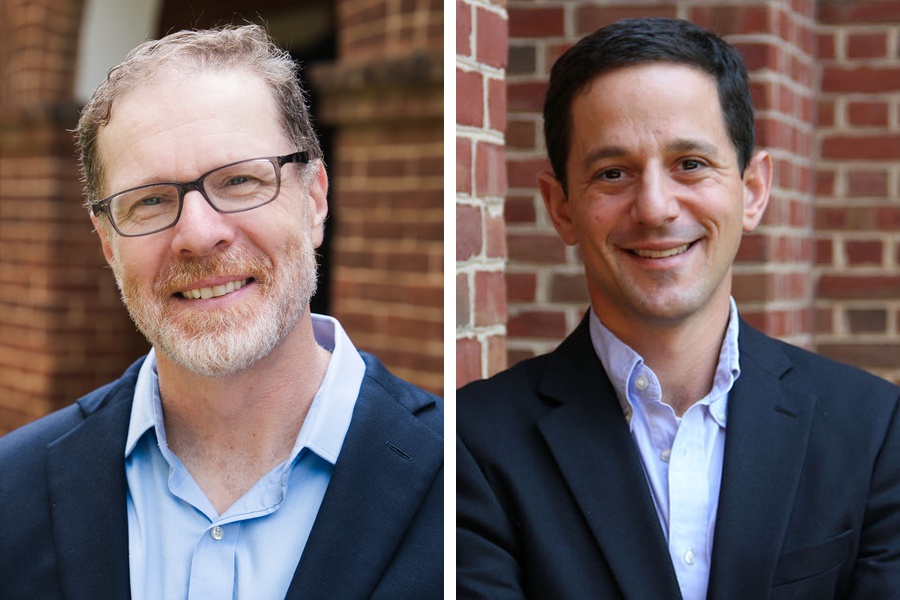
Our PEOPLE
Hear from the UVA Batten
Community
Events & Opportunities
Join Us at an Upcoming
UVA Batten Event
10:30 – 11:15am
At the Frank Batten School of Leadership & Public Policy, we are committed to solving the world’s toughest policy challenges. We know the complex issues of our time demand innovative, collaborative, cross-sector relationships within our walls and beyond. Our multidisciplinary approach to problem-solving and emphasis on ethics reinforce our focus on how leadership works, why context matters in decision-making and which actions lead to tangible results.Come hear more about our two-year Bachelor of Arts in Public Policy & Leadership, Accelerated Master of Public Policy, and Minors in Public Policy & Leadership or Social Entrepreneurship!This session is only open to students attending UVA's incoming first-year and transfer orientations.
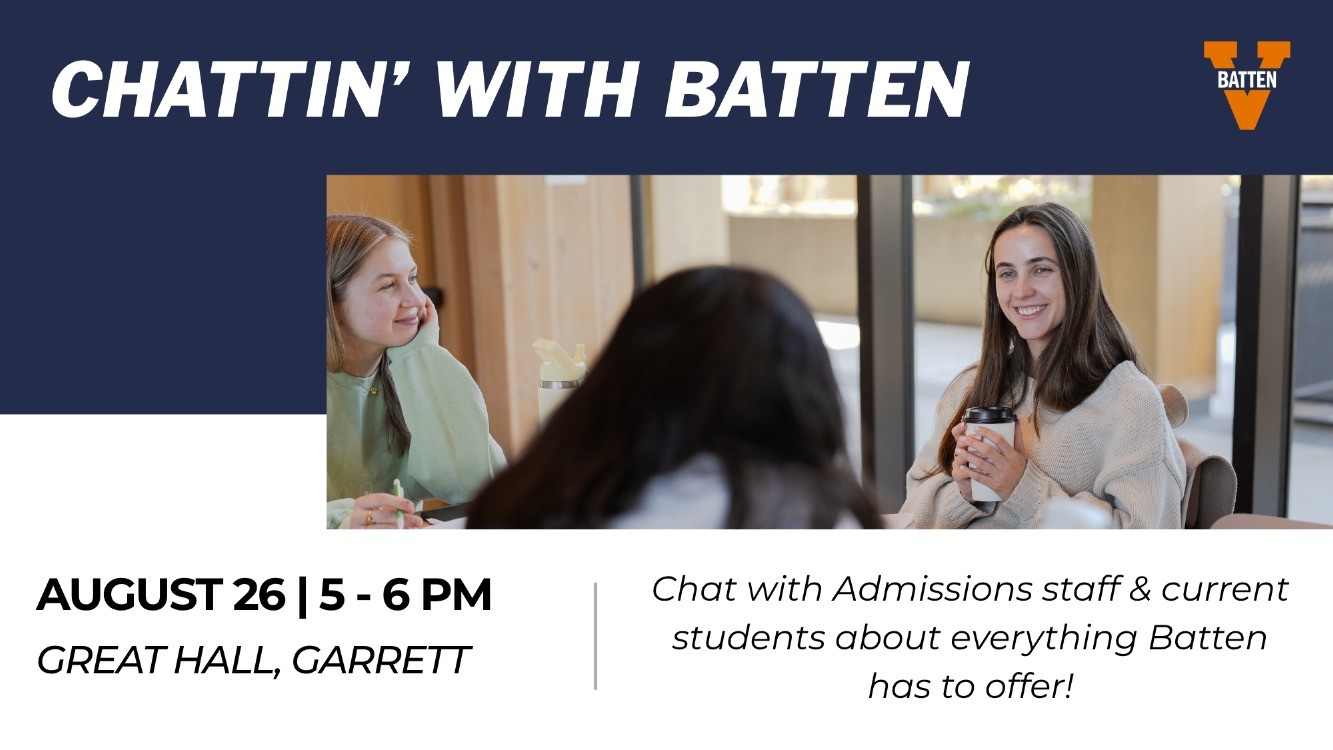
5 – 6pm
Welcome to Batten! An Informal Drop-In for New StudentsThe Batten School invites new students to drop in and explore everything our community has to offer! Whether you're just getting started or still exploring your options, this is a great opportunity to connect with Admissions staff and current students in a relaxed, welcoming setting.Come learn about Batten's undergraduate major, minors, and Accelerated MPP program, the admissions process, and what life at Batten is really like. Stop by the Great Hall in Garrett Hall, grab some cookies and punch, and get to know the people and community that make Batten special.Pre-register HERE for easier check-in — we can't wait to meet you!
Integrating Leadership & Public Policy
The Frank Batten School of Leadership and Public Policy is designing a new model of public policy education – one that infuses leadership with policy, and policy with leadership. Our programs are defined by a multidisciplinary approach to problem-solving, rigorous quantitative and qualitative analytical training, experiential learning opportunities, and evidence-based decision-making.
World-Class Teaching & Research
Our community is defined not only by academic rigor, but also real-world experience, teaching, and mentoring. This approach has attracted a multidisciplinary faculty of leading scholar-practitioners in political science, social psychology, public administration, history, economics, and law from around the globe. Our research centers and policy labs are hubs for collaboration and impact.
Excellence with Humanity
At home in one of the world’s great public universities, we are passionate about improving lives and solving humanity’s toughest policy challenges. We seek to attract a community as diverse in thought, experience, background, and aspiration as the world we want to serve, and to bring them together in an intellectually courageous and collaborative environment. We are advancing new knowledge, new skills, and new solutions, cultivating leaders for our common future.
We offer a variety of graduate and undergraduate programs.
For students interested in graduate studies, we offer a two-year Master of Public Policy program, plus six options to combine the MPP with other degrees at the University of Virginia. For those interested in a hybrid program based in Northern Virginia, we offer the Master of Science in Public Policy and Data that can be completed in as little as twelve months. Additionally, for the most flexibility, we offer two graduate certificates – one in Public Leadership and one in Public Policy – that can be taken online or in Charlottesville.
Undergraduate opportunities for current UVA (and prospective UVA undergraduate transfer) students may pursue a Bachelor of Arts in Public Policy and Leadership, a Minor in Public Policy and Leadership, a Minor in Social Entrepreneurship, and an Accelerated MPP, which allows students to earn undergraduate and graduate degrees in just one additional year of study.
Our programs prepare students for a wide variety of policy-oriented careers in the public, non-profit, and private sectors. The Batten School offers its own career advancement team that supports students from landing a summer internship and full-time position, to making career changes long after graduation. They help with resumes, interviews, and networking, among other things.
Example employers include congressional committees, federal agencies (e.g., EPA, GAO, CBO, CRS, FTC, CDC), cabinet departments, various state and local government agencies, the World Bank, consulting firms (e.g., Deloitte, McKinsey, Accenture), and non-profits and NGOs in many policy sectors, such as environmental, health, education, and international development policy.
The Master of Public Policy (MPP) is a full-time, Charlottesville residential, two-year program. New students enter the fall of each academic year.
The Master of Science in Public Policy and Data (MSPP&D) is a primarily online program offered in both part-time and full-time formats. Coursework is asynchronous, with approximately one hour of synchronous engagement each week, supplemented by brief in-person experiences at the UVA in Northern Virginia campus for orientation at the beginning of the program and the culminating capstone. Full-time students complete the degree in 12 months and may begin in either the fall or spring semester. Students must complete 31 credits.
The Accelerated MPP program begins in the fall of each academic year and takes place over the course of your final undergraduate year at the University plus one additional year as a full-time graduate student. It cannot be expedited further or taken part-time.
Batten’s Graduate Certificate programs are offered both part-time and full-time, online or in-person, and can be started in the fall or spring semesters. Students must complete 12 credits for each certificate, and students can take one to four classes a semester.